Stacks
A stack is a container of related capabilities, delivered by modules — the smallest deployable units in TAPPaaS (see the Capabilities overview and the Meta Model for how this is modeled).
| Stack | What it delivers |
|---|---|
| Foundation | The platform itself: cluster, network, identity, backup, logging, automation |
| AI | Private AI: model serving, gateway, chat UI |
| Collaboration | Files, office and communication |
| Home | Home automation, its device gateways, and (planned) home media |
| Security | Secrets and secure access |
| DevOps | Development and test capabilities (planned) |
Each stack page links the module catalog entries (the modules' own READMEs, always current with the source). How modules depend on each other is computed from the modules themselves: see the module dependency graph.
Every module declares exactly one stack, in its own JSON — the list lives in schemas/module-fields.json and this page follows it. A module with no natural stack yet is misc: Windows Server (run Windows workloads as managed modules) is the one such module today, and misc is a waiting room, not a description.
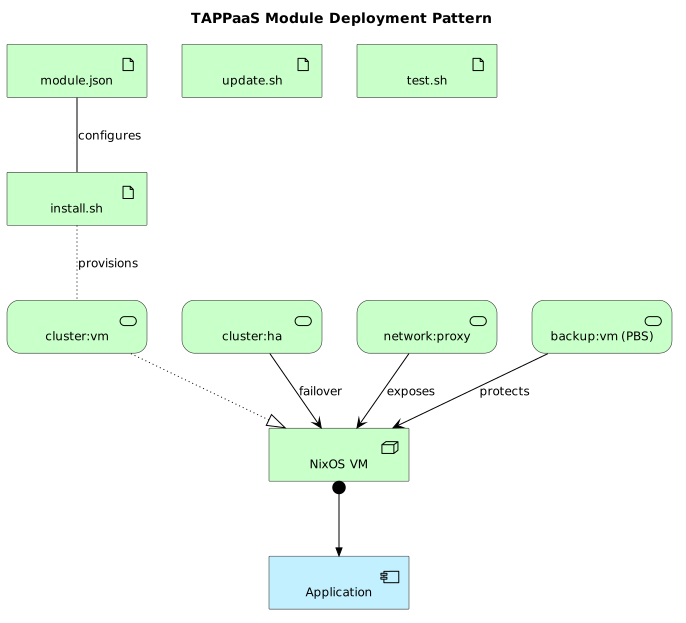
Module deployment pattern
Every module follows the same deployment pattern — one json contract, the platform scripts, a VM provisioned via cluster:vm, exposure via network:proxy, protection via backup:vm: